Ensuring efficient, reliable cooling for high-density workloads
The rapid growth of artificial intelligence, machine learning and accelerated computing is fundamentally changing how data centers are cooled. Graphics Processing Unit (GPU) and Tensor Processing Unit (TPU) based platforms require up to 10 times more energy and operate at significantly higher power densities than traditional Central Processing Unit (CPU) based IT loads, often exceeding the practical limits of air cooling. As a result, liquid cooling is no longer an optimization choice. In many cases, it is a requirement driven by the chip manufacturer, not by the data center operator’s preference. Early adopters of large scale liquid cooling included TPUs, which relied on chilled water and chiller plants to manage concentrated heat loads reliably. Today, similar cooling approaches are expanding across hyperscale and enterprise environments as GPU-dense clusters become more common with similar requirements to TPUs.
In practice, many facilities deploy hybrid cooling architectures. Liquid cooling is used at the chip or rack level, while heat is ultimately rejected using ambient temperature differentials through dry coolers or cooling towers whenever possible. These hybrid systems depend on well‑controlled chilled water loops that behave more like industrial utilities than traditional IT infrastructure or HVAC.
In this context, cooling performance depends on precise control of liquid analysis, pressure, flow and temperature. Without accurate instrumentation, operators risk thermal instability, reduced equipment lifetime, unplanned downtime and unnecessary energy or water consumption. Endress+Hauser supports data center operators with industrial‑grade measurement solutions and digital services designed for continuous operation across primary and secondary chilled water and liquid cooling loops to increase Power Utilization Effectiveness (PUE) and Water Utilization Effectiveness (WUE).
Viktige fakta
10×
higher energy demand
from GPU- and TPU-based platforms compared to traditional CPU-based IT loads
Kilde: DCD
A comprehensive provider of instrumentation solutions for data center liquid cooling


Water quality monitoring for long‑term reliability of chilled water systems
As data centers increasingly rely on chilled water and liquid cooling, water quality becomes a critical reliability factor. Poorly controlled pH, conductivity or turbidity can accelerate corrosion, scaling and fouling, reducing heat transfer efficiency and damaging cold plates, heat exchangers and pumps.
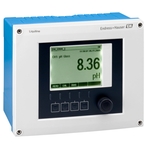
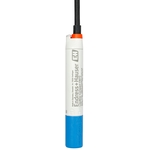
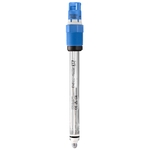
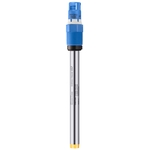
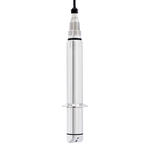
Liquid analysis with Liquiline CM444 multiparameter transmitter, combined with Memosens pH, conductivity and turbidity sensors, enables continuous monitoring of cooling water quality across primary and secondary loops. Digital Memosens technology improves measurement reliability and simplifies maintenance, supporting predictive approaches to asset protection and system stability in liquid cooled data centers. Learn more about data center cooling fluid quality monitoring.

Pressure measurement to protect liquid‑cooled IT hardware
Stable pressure conditions are critical in liquid cooling systems, particularly in direct-to-chip (D2C) architectures where cold plates and quick connectors are sensitive to pressure fluctuations. Abnormal pressure conditions may indicate blocked filters, leaks, fouled heat exchangers, pump degradation or air ingress.
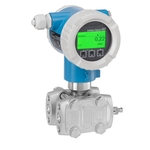
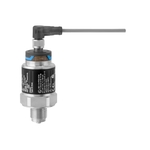
Continuous pressure monitoring across chilled water and secondary liquid loops provides real time visibility into hydraulic stability. Endress+Hauser pressure transmitter Deltabar PMD75B and pressure transducer Cerabar PMC21, support early fault detection, safe pump changeovers in redundant architectures and condition based maintenance strategies. This helps reduce the risk of leaks, equipment damage and unplanned downtime in liquid cooled environments.

Flow measurement as the foundation for efficient liquid and chilled water cooling
In liquid cooled data centers, heat removal capacity is directly proportional to the mass flow of cooling water through cold plates, rear door heat exchangers, cooling distribution units (CDUs) and central chilled water plants. Insufficient flow can cause localized overheating at the chip level, while excessive flow increases pumping energy and operating costs.
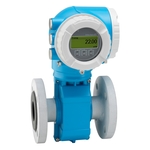
Modern cooling layouts often include short pipe runs, compact manifolds and frequent flow reversals during redundancy switching. These conditions are common in secondary liquid cooling loops close to the IT load. Compact electromagnetic flowmeters such as Picomag Inline are well suited for these applications because they provide accurate, bidirectional flow measurement without pressure loss or straight pipe requirements. For primary chilled water distribution, larger electromagnetic flowmeters such as Proline Promag W 300 support hydraulic balancing, redundancy management and performance monitoring across chillers, heat exchangers and main headers. Reliable flow data is essential for maintaining stable cooling performance as liquid cooling capacity scales across halls or campuses.


Temperature measurement for energy‑efficient chilled water operation
Temperature is one of the most important control variables in liquid‑cooled and chilled water data center systems. Operators often run cooling systems conservatively to avoid thermal risk, which can lead to unnecessary overcooling and increased energy consumption.
Accurate temperature measurement at supply and return points, CDUs, heat exchangers and chiller interfaces enables operators to monitor delta‑T and adjust cooling capacity more precisely. This is especially important in hybrid architectures, where liquid cooling at the rack must remain stable even as ambient conditions affect heat rejection efficiency.
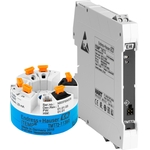
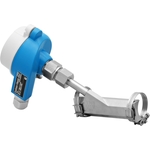
Endress+Hauser industrial temperature sensors and transmitters, such as iTHERM ModuLine TM152, iTEMP TMT72 and iTHERM SurfaceLine TM611, are designed for fast response and long‑term stability under variable flow conditions. Reliable temperature data supports tighter control strategies, helping operators reduce energy consumption while maintaining safe thermal margins for GPU and TPU workloads.


Measurement consistency across hybrid cooling architectures
Modern data centers often operate a mix of cooling approaches. Large hyperscale facilities supporting AI workloads may rely heavily on liquid cooling and chilled water, while more traditional data centers serving internet traffic continue to use air cooling for CPU‑based loads. Even within a single facility, multiple cooling loops may coexist.
Using a consistent portfolio of flow, temperature, pressure and analytical instruments across these loops simplifies commissioning, troubleshooting and performance optimization. Standardized measurement concepts using Endress+Hauser instrumentation help operators maintain transparency and scalability as liquid cooling capacity expands.

Digital connectivity and operational visibility
Liquid‑cooled data center infrastructure requires more than local measurement points. Operators need centralized visibility into device status, diagnostics and historical trends to support proactive decision‑making and ensure reliable cooling performance.
Netilion digital services provide this centralized access by aggregating device health information, documentation and lifecycle data across distributed cooling assets. By connecting flowmeters, analytical instruments and transmitters, Netilion enhances operational transparency, reduces manual effort and supports long‑term measurement reliability in chilled water and liquid cooling systems.
To meet strict cybersecurity requirements, many data center operators limit data exchange to one‑way communication and restrict transmitted information to device‑specific diagnostics. This approach reduces risk by preventing direct interaction with the control system. A device‑to‑dashboard architecture, such as Netilion, supports this strategy by avoiding tunneling into the control layer. Instead, data is securely transmitted to a cloud‑based interface for monitoring and analysis. By minimizing connectivity pathways, this approach reduces the attack surface while still enabling remote diagnostics and supporting efficient maintenance planning.

How Endress+Hauser supports OEMs and system integrators in data centers
Endress+Hauser supports OEMs and system integrators in data centers by combining decades of instrumentation expertise with tailored services that address the growing demands for speed and precision. With more than 70 years of experience, we deliver reliable measurement solutions designed for both harsh industrial conditions and cleanroom‑like data center environments, ensuring consistent performance of cooling and energy systems.
Our comprehensive portfolio covering liquid analysis, pressure, flow and temperature enables precise monitoring and control of critical processes, reducing downtime and optimizing system efficiency. To help partners meet tight project timelines, Endress+Hauser offers high product availability, instrumentation stocking programs and pre‑calibrated devices that accelerate commissioning and lower operational costs. Its global network ensures consistent performance across international deployments, while local support provides fast response and expert guidance.
We also support integration into complex or existing infrastructures through engineering consultation and commissioning services, minimizing risk and ensuring long‑term reliability. By enabling accurate monitoring of utilities consumption, Endress+Hauser helps optimize cooling performance and improve resource efficiency, making us a trusted partner for scalable, high‑performance data center solutions.

%20The%20economical%20flowmeter%20for%20process%20quality%20control%20and%20monitoring%20-%20PP01.jpg "Bilde av Picomag Inline – Den økonomiske mengdemåleren for kvalitetskontroll og prosessovervåking")