Cooling fluid quality monitoring for reliable liquid-cooled data centers
As data centers adopt liquid cooling to support AI and high‑density workloads, continuous monitoring of cooling fluid quality becomes essential to protect equipment, optimize energy use and prevent downtime.
Ensuring data center cooling performance through continuous fluid quality monitoring
The rapid growth of cloud computing, artificial intelligence (AI) and tensor processing unit (TPU) or graphics processing unit (GPU) intensive workloads is pushing data centers to unprecedented power densities. As a result, operators are increasingly moving from traditional air cooling toward liquid based cooling architectures such as direct-to-chip (D2C), rear door heat exchangers (RDHx) and immersion cooling. While these approaches significantly improve heat removal efficiency, they also introduce new operational risks.
Most liquid-cooled data centers rely on water-based fluids with additives such as glycol for freeze and fouling protection. To ensure reliable operation, these fluids must remain chemically stable, clean and within defined limits. Even minor deviations can lead to corrosion, fouling, biological growth, reduced heat transfer and ultimately increased energy use or unplanned downtime.
In high-performance applications like D2C cooling, deionized or ultra-pure water is often preferred for its superior thermal properties and low viscosity. However, its low ionic content makes it highly sensitive to contamination and material interactions, increasing the risk of corrosion and chemical instability. Maintaining performance therefore requires strict material compatibility and continuous monitoring of key parameters such as pH, conductivity and contamination levels.
Continuous cooling fluid quality monitoring and liquid analysis provide the visibility needed to maintain reliable, efficient and sustainable data center operations. Industrial grade measurement solutions from Endress+Hauser support operators across the entire cooling loop, from primary heat rejection to secondary and rack level cooling circuits.
Process overview
The crucial role of liquid analysis in optimizing data center liquid cooling
Liquid analysis plays a critical role in optimizing data center cooling system by helping operators monitor water quality, maintain chemical balance and reduce energy consumption.
Liquid cooling makes fluid quality a direct uptime factor
As data centers transition from air cooling to liquid cooling to support high‑density AI and GPU workloads, the cooling fluid becomes part of the critical thermal control chain. Liquid cooling absorbs heat close to processors and transports it through heat exchangers, which means the condition of the cooling fluid directly influences temperature stability and operational reliability. In this context, cooling fluid quality is no longer a background utility concern but a factor that can affect uptime, efficiency and asset protection.
Large data centers often rely on interconnected cooling skids and central utility buildings. Without continuous visibility into fluid conditions, efficiency losses or contamination can remain unnoticed until temperatures drift or alarms are triggered. Real‑time monitoring enables operators to adapt cooling performance to changing heat loads, helping avoid both overcooling, which wastes energy, and undercooling, which increases risk of overheating.
Industry practice shows that effective liquid cooling monitoring focuses on a small number of key indicators. pH provides insight into chemical stability, conductivity helps detect changes in coolant composition, and turbidity indicates cleanliness and particle load. Together, these parameters form a practical baseline for assessing cooling fluid health and supporting stable, predictable cooling performance.
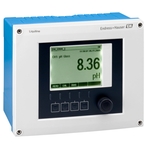
Endress+Hauser supports this approach with multiparameter liquid analysis solutions designed for cooling skids. A common setup combines the Liquiline CM444 multiparameter controller with Memosens pH, conductivity and turbidity sensors, providing continuous measurement, reliable trending and seamless integration into data center monitoring systems. Combining three parameters in a single transmitter reduces wiring requirements and overall footprint, while additional outputs such as relays provide extended functionality within a user-friendly interface. Integrated diagnostics, supported by Heartbeat Technology, enhance system availability and uptime. Continuous monitoring with fast alarming enables early detection of deviations, supporting proactive maintenance strategies rather than reactive interventions.
Insights
pH monitoring helps control corrosion risk in liquid cooling loops
pH is one of the most important indicators of cooling fluid chemistry. In liquid cooled data centers, coolant is in continuous contact with pipes, heat exchangers, cold plates and sensors. If pH drifts outside the intended range, the risk of corrosion increases and measurement reliability can be affected over time. Temperature measurement documentation also highlights that liquid coolants can contribute to corrosion or contamination of sensors, reducing accuracy and service life if chemical conditions are not controlled.
Corrosion risk is particularly relevant in large, distributed cooling systems where small chemical imbalances can propagate across multiple loops. Continuous pH monitoring provides early warning of chemical drift, allowing operators to respond before asset integrity or cooling efficiency is compromised. This is especially important as data centers scale and operate with tighter thermal margins.
Digital pH measurement also supports more efficient maintenance. Instead of relying on periodic sampling alone, operators can trend pH over time, correlate deviations with operating events and schedule corrective actions more precisely. This reduces unnecessary fluid replacement and supports more stable long term operation.
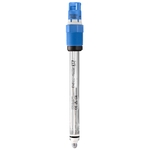
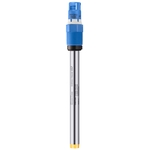
Endress+Hauser digital pH sensors based on Memosens technology are designed for this type of continuous monitoring. Sensors such as Memosens CPS11E store calibration and process data digitally, supporting trend analysis and predictive maintenance concepts. Integrated with multiparameter transmitters like Liquiline CM444, pH measurement becomes part of a broader cooling fluid quality monitoring strategy that protects assets and supports reliable cooling performance.
Conductivity monitoring improves coolant control and anomaly detection
Conductivity is a fast and stable measurement that provides insight into the dissolved content of the cooling fluid. In data center cooling systems that use chiller water or water‑glycol mixtures, conductivity monitoring helps detect changes in coolant composition that may indicate dilution, contamination or unintended mixing. These changes can affect heat transfer efficiency and long‑term system reliability.
Liquid cooling systems are complex and dynamic. Variations in flow, heat load and operating conditions can mask early signs of fluid degradation if only temperature is monitored. Conductivity adds an additional layer of visibility, enabling operators to identify anomalies before they translate into performance issues or increased energy consumption.
Trending conductivity over time also supports consistency across multiple cooling skids and facilities. When combined with temperature and flow data, conductivity helps operators understand whether changes in cooling performance are driven by process conditions or by fluid quality issues.
Endress+Hauser supports conductivity monitoring in liquid‑cooled data centers with digital sensors such as the Memosens CLS82E conductivity sensor. Integrated with Liquiline CM444, these sensors provide real‑time measurement and digital data continuity. In addition, some electromagnetic flowmeters used in cooling applications, such as Picomag and Proline Promag W 300, can also provide conductivity as an additional variable, increasing the value of each measurement point without adding complexity.
Mengdemåler og spesialist for krevende vann- og avløpsapplikasjoner med en kompakt og lett tilgjengelig transmitter. Egnet for enkle måleoppgaver som råvannsinntak.
Turbidity monitoring helps protect heat transfer efficiency
Clean cooling fluid is essential for stable heat transfer in liquid‑cooled data centers. Suspended particles, biological growth or other contaminants can accumulate over time, increasing filter load, contributing to fouling and reducing cooling efficiency. White‑paper content on data center cooling highlights that poor water quality and debris can damage components, reduce heat transfer and ultimately impact system reliability.
Turbidity monitoring provides an early indicator of rising particle levels in the cooling loop. Rather than reacting to clogged filters or degraded heat exchangers, operators can use turbidity trends to identify cleanliness issues early and take targeted action. This supports smoother operation and reduces the likelihood of unplanned maintenance.
Low‑level turbidity measurement is particularly valuable in modern data centers, where even small changes in cooling performance can have a noticeable impact on energy use and thermal stability. Continuous monitoring allows operators to differentiate between gradual contamination and sudden events, improving decision‑making.
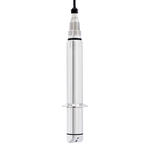
Endress+Hauser offers digital turbidity sensors such as Memosens CUS52D for reliable low‑level turbidity measurement. When combined with pH and conductivity measurement on a multiparameter platform like Liquiline CM444, turbidity monitoring becomes part of a comprehensive cooling fluid quality strategy that supports clean cooling loops and consistent heat transfer performance.
Flow measurement links fluid quality to real cooling capacity
Cooling fluid quality must be evaluated together with flow conditions to understand actual cooling performance. Even perfectly conditioned coolant cannot remove heat effectively if flow is unstable or insufficient. Application-focused analyses of data center cooling systems highlight that modern data centers face increasing demands for accurate flow monitoring while dealing with limited space, diverse cooling architectures and strict security requirements.
Flow stability is critical because disruptions can lead to rapid temperature increases and stress cooling equipment. In addition, pressure losses caused by poorly selected instrumentation can increase pump energy consumption, reducing overall efficiency. Accurate, low‑loss flow measurement supports both thermal performance and energy efficiency goals.
By correlating flow data with temperature and fluid quality measurements, operators gain a clearer picture of cooling capacity and system health. This integrated view helps validate that cooling loops are delivering the intended performance and supports informed operational decisions.
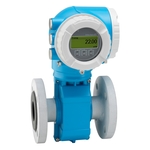
Endress+Hauser provides electromagnetic flowmeters suited to different parts of the data center cooling system. Picomag is designed for secondary loops and tight spaces, and is delivered with Bluetooth functionality deactivated at the factory, aligning with the strict operational and cyber security requirements common in data center environments. For primary loops and larger pipe diameters, Proline Promag W 300 offers accurate, bidirectional flow measurement without pressure loss and without the need for straight pipe runs. Together, these solutions help connect fluid quality data to actual cooling performance.
Mengdemåler og spesialist for krevende vann- og avløpsapplikasjoner med en kompakt og lett tilgjengelig transmitter. Egnet for enkle måleoppgaver som råvannsinntak.
Reliable temperature measurement supports efficiency and PUE targets
Temperature is a primary control variable in data center cooling. Because cooling systems can account for up to 40% of total energy consumption in data centers, precise temperature measurement is essential for improving Power Utilization Effectiveness (PUE) and maximizing the energy available for compute workloads. In liquid cooling systems, rapidly changing heat loads and dynamic flow conditions require fast, reliable temperature data to maintain stable and efficient operation.
Inconsistent or delayed temperature measurements can lead to overcooling or undercooling, both of which reduce efficiency and increase operational risk. Sensor placement and design also matter, as liquid coolants can affect sensor materials over time if they are not well suited to the application.
High‑quality temperature measurement allows operators to fine‑tune cooling control, stabilize thermal conditions and improve power usage effectiveness. When temperature data is combined with flow and fluid quality information, it provides a more complete understanding of cooling system behavior.
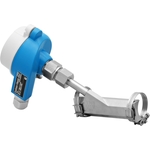
Endress+Hauser supports temperature measurement in data center cooling with a broad portfolio of industrial thermometers and transmitters. Solutions include classic, thermowell or direct immersion based thermometers (RTDs or Thermocouples) for robust process measurement as well as non‑invasive options such as iTHERM SurfaceLine TM611, which avoids process penetration. This unique clamp on temperature measurement minimizes contamination risk especially during commissioning where additional measurements may be useful without needing the process connection in the long run No wake frequency calculations and no provisions in the piping. The TM611 does this without requiring Electronic Compensation (like other skin temp or clamp on measurements), allowing for the benefits of a surface temperature measurement without sacrificing performance – when compared to a traditional thermowell These approaches support reliable temperature monitoring across diverse cooling architectures.
Mengdemåler og spesialist for krevende vann- og avløpsapplikasjoner med en kompakt og lett tilgjengelig transmitter. Egnet for enkle måleoppgaver som råvannsinntak.
Vi bruker informasjonskapsler til å forbedre surfeopplevelsen din, samle inn statistikk for å optimalisere nettstedsfunksjonalitet og vise skreddersydde annonser eller skreddersydd innhold.




%20The%20economical%20flowmeter%20for%20process%20quality%20control%20and%20monitoring%20-%20PP01.jpg "Bilde av Picomag Inline – Den økonomiske mengdemåleren for kvalitetskontroll og prosessovervåking")